
CUSTOM ABSOLUTE AND DIFFERENTIAL PRESSURE TRANSDUCERS
At TAVIS, we understand that not one product can fit all applications. That’s why we have specialized in custom pressure transducers since the beginning. Upon receiving your specifications, we will select the appropriate electronics, determine the optimal gauge material, assess radiation and other novel environmental conditions, catalog unique NRE and SDRL requirements, and then propose the best solution for your unique application. While operating in damaging radiation, high vibration or shock, to long mission durations, TAVIS transducers will remain stable. Contact us today to see how we can best handle your pressure.
ABSOLUTE PRESSURE
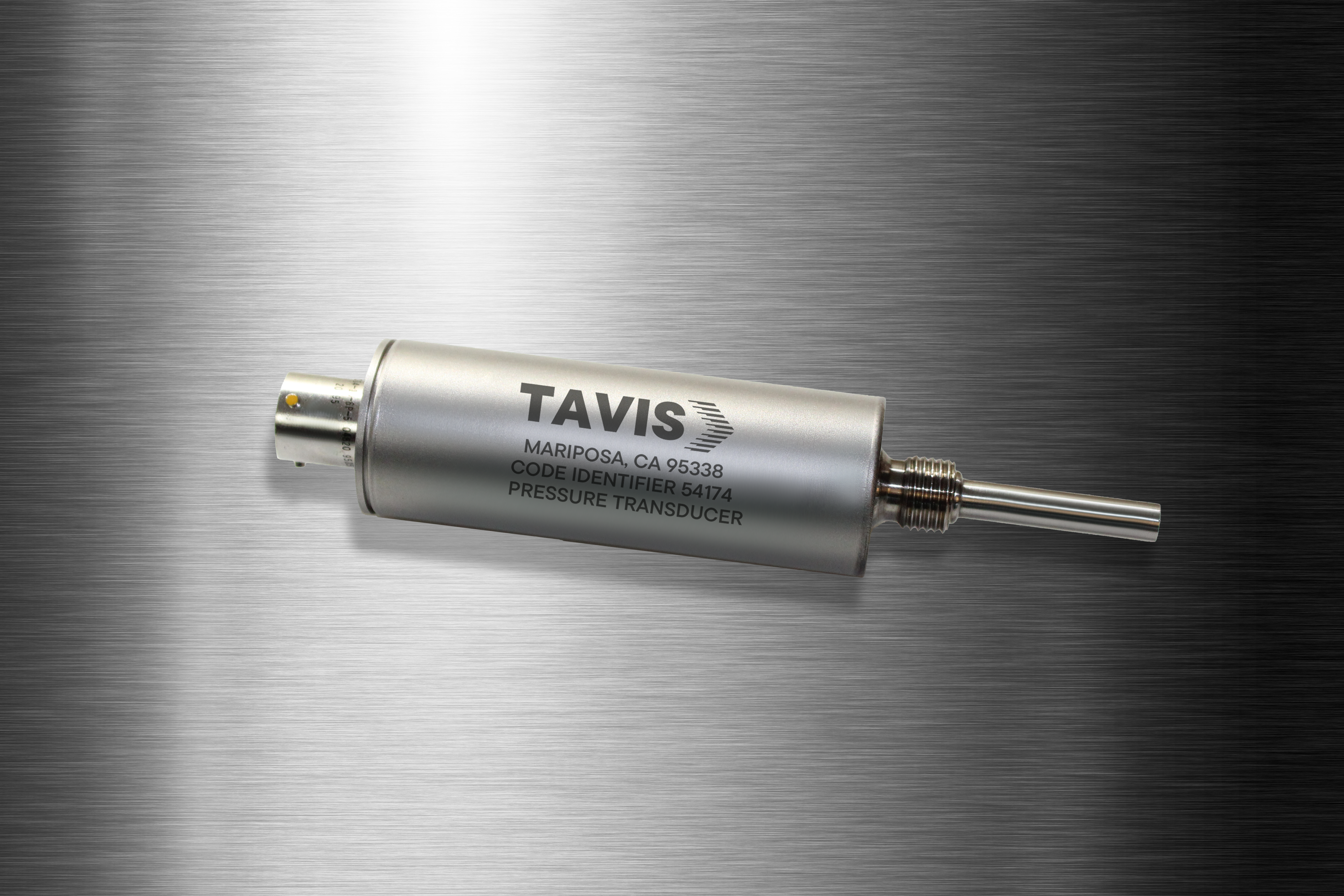
TAVISCorporation’s absolute pressure transducers boast an impressive history with heritage designs going back to the Viking Lander and Apollo-Soyuz mission up through current missions such as the Dragonfly mission to Saturn’s moon Titan. Designs include features crucial for long space missions such as radiation hardened electronics (100 kRad is standard), electromagnetic shielding, high shock/high vibration capability, and wetted materials capable of measuring corrosive media such as hydrazine, MMH, and MON3. Our sensing elements and electronics are housed in a fully welded and hermetically sealed case. Variable reluctance sensors are able to remain more accurate over longer mission durations in harsh environments than other sensing technologies.
LOW PRESSURE ABSOLUTE TRANSDUCER
Our low pressure transducers are slightly larger in diameter than our high-pressure transducers to accommodate a diaphragm capable of sensing down to Full Scale pressures of 0.5 in H2O. Despite such low sensing ranges, these sensors can withstand proof pressures of up to 200X without damage.
HIGH PRESSURE ABSOLUTE TRANSDUCER
Our high-pressure transducers have been used on satellite missions for 50+ years. Standard satellite models can sense full-scale pressures from 30 psia up to standard pressures for propulsion of 4,000 – 6,000 psia. Custom designs can be made for higher pressures. TAVIS provides transducers for maritime and industrial applications up to 10,000 psia.
DIFFERENTIAL PRESSURE
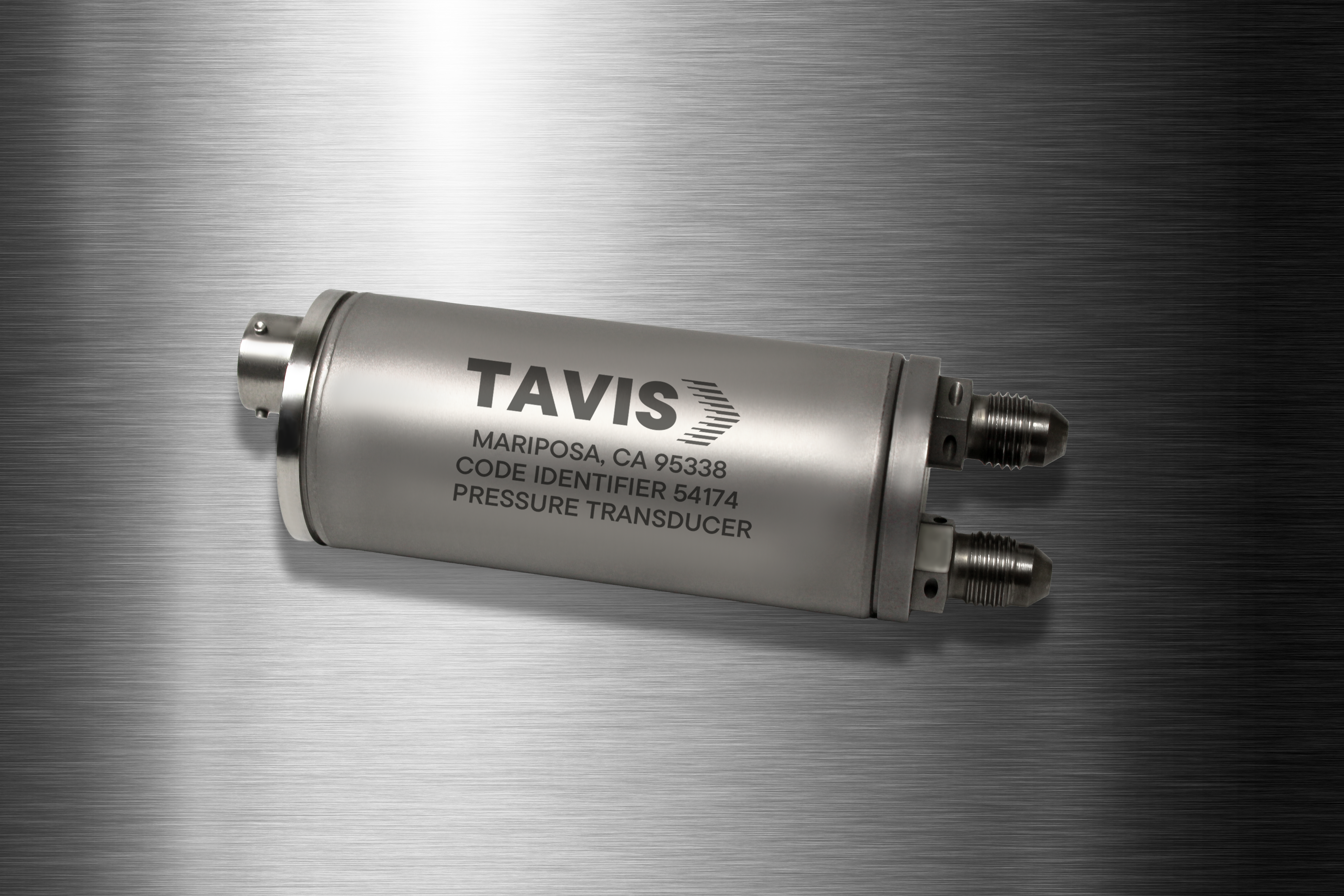
TAVISCorporation’s differential pressure transducers are uniquely superior due to our variable reluctance sensing mechanism. The magnetic sensing across an air gap to the diaphragm means that there are no electrical connections on, or adjacent to, the diaphragm. Our differential transducers are commonly wet-wet functioning, with fluid on both sides of the diaphragm. This makes transducer construction simpler, more robust, and ensures extended reliability.
Designs include features crucial for long space missions such as radiation hardened electronics, electromagnetic shielding, high shock/high vibration capability, and wetted material compatibility with corrosive materials such as hydrazine, MMH, and MON3. Our variable reluctance sensors are able to remain more accurate over longer mission durations in harsh environments than other sensing technologies.
LOW PRESSURE DIFFERENTIAL TRANSDUCER
Our low pressure differential transducers are ideally suited to applications requiring very low differential pressure measurements. Available in pressure ranges as low as 0.01 PSID, this design features low power consumption and a wide input voltage range. The all-welded stainless-steel construction and extremely stable electronics package combine to produce an extremely accurate, yet rugged transducer. Implementations of our low pressure differential include fuel tank telemetry for rockets.
MEDIUM PRESSURE DIFFERENTIAL TRANSDUCER
Our medium differential pressure transducers strike a balance between a small outline and the ability to measure low differential pressures. Configurable for MEOPs from 0.1 to 100 PSID, these transducers are ideally suited to applications requiring working media on both sides of the diaphragm (wet-wet capability). Designed to operate across large temperature ranges and environments, TAVIS medium pressure differential transducers are well equipped to measure differential pressure in demanding environments.
HIGH PRESSURE DIFFERENTIAL TRANSDUCER
Our high pressure differential is the Swiss-army knife of the TAVIS design portfolio. Lightweight and versatile, it weighs under 6 ounces and can be configured for both absolute and differential pressure measurements with MEOPs between 1 and 200 PSI. High and low ports allow customers to measure differential pressure or the low port can be vented to measure gage pressure to trap a reference pressure. Options of Inconel™ or stainless steel gages provide customers with the flexibility to measure a wide array of media. Implementations of our high pressure differential are diverse, but common utilization includes both commercial and military aviation, as well as tactical projectile applications.